


the pain and delight of being who you are
- Mariane Morais

- 11 de jul. de 2024
- 7 min de leitura

Frankenstein and Bella Baxter have similar conceptions and origin, but what happens when two science fiction beings that didn't come from dust, and won't return to dust, collide?
When I looked around I saw and heard of none like me. Was I, then, a monster, a blot upon the earth, from which all men fled and whom all men disowned?
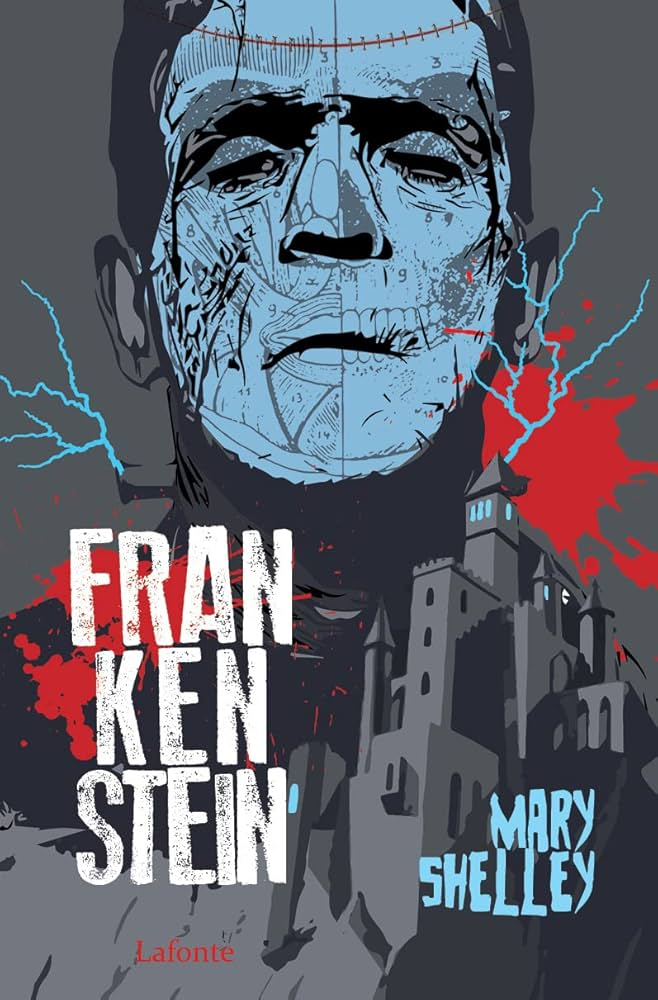
And thus thinks the humanoid and stitched-together Frankenstein, designed by the petty and egotistical mind of Victor Frankenstein, wandering alone and questioning his existence after the abandonment by his 'father,' so to speak. A world literature classic and the reason why Mary Shelley, the author of the work, is the mother of science fiction, the book originating from the 19th century was conceived on a stormy night at Lord Byron's castle.
The introduction of the book (cover edition shown alongside) begins with an honest and reflective text by the writer, who notes that her husband and Lord Byron spent hours talking to each other, including topics that would form the basis for her story: darwinism, galvanism, and profane arts. This fact provides us with a good context about the origins of Shelley's thoughts, which would result in the iconic monster of disproportionate figure, awkward and without any support, doomed to live a miserable life, both materially and emotionally, as well as socially.

I have adventured it and found nothing but sugar and violence.
Poor Things (dir: Yorgos Lanthimos, 2023) follows the story of a captivating, naive, curious, clumsy, brave, and beautiful young woman, and invites the audience to take a close look at an eccentric and bizzare 19th century.
The movie is an book adaptation based on Alasdair Gray story from 1992. It tells the story of Bella Baxter, who, after her former self (named Victoria, who was pregnant) commits suicide by jumping off a bridge, is saved by Dr. Godwin, a scientist a la to Frankenstein (both the creator and the creature), who implants the fetus's brain into the already developed body of the mother. Despite being the mother of her daughter and the daughter of her mother, this being - visually ordinary - converges between the two and has to adapt to human condition and her completely unique circumstances.
Both stories suggest the creation of life by unnatural means, as well as the creator & creature relationship and the consequences of playing God. Frankenstein and his despair and acceptance of human perversity reflect how the creature never had any chance of a minimally fruitful life. Victor Frankenstein, the scientist and true monster of the story, is only concerned with "how can I do it," completely ignoring the "why should I do it.".
There is something poetic about realizing that the creature Victor despises so much will carry his surname for all eternity, and even though he vehemently tried to dissociate himself from his creation, everyone will always know it by his name.
The opposite happens with Dr. Godwin, Bella's creator. He does not possess all of Victor's perverse traits, although his eccentricity is questionable and his motives uncertain. To begin with his name, there are two pleasant points to be highlighted:
Godwin is the name of Mary Shelley's father, and what a great reference to her work. A philosopher and intellectual, he educated her with much dedication and, contrary to the norms of the time, encouraged her studies and critical thinking.
His nickname, God, could not be clearer: who else but him for Bella to call God?
The doctor is attached to Bella, and even reluctantly, he understands that his creature answers for herself, and her own wishes will prevail. Godwin is a creator, but he is also a father and a good male figure, representing care and love.
The creator's point in relation to the creature is what first makes us understand that the similarities between these two characters - F and B - are at their beginning, but not at their end. While the 19th-century creator is cowardly and rejects his obligations towards his creature, the 20th-century creator faces the challenges of educating his creature, even though he understands her more as an experiment than as a living being that thinks.
The myth of Prometheus is fundamental to understanding this issue. The titan who creates humanity from clay and gives humans fire, defying the gods. Prometheus symbolizes innovation, creation, and rebellion against divine authority. He also represents the dangers and responsibilities of creation. All these issues are central to both Shelley's and Gray's works. What greater innovation than creating the very flame of life? What greater rebellion than defying nature and its greatest principle?
The means by which both creatures will understand the process of including themselves in humanity differ greatly, but we can question identity and belonging from a common point: appearance.
Bella Baxter and the Semiotics of the Absurd
Emma Stone brings the character Bella to life, which to date may be her masterpiece as an actress. The kind that, many years from now, the audience will remember as her finest work. That said, the setting and aesthetics of the film are also essential for understanding this creature: the first scene of the feature is entirely blue (a pun, blue means both the color and a feeling of melancholy), foreshadowing her suicide as she is literally and metaphorically drowning.

As the film progresses, there is a reimagining of the end of the Victorian era, and through colors, textures, and shapes, one can determine Bella's psychological state and understanding of the world (costume designer Holly Waddington, now Oscar-winning, is responsible for the costumes). As a child, the character is always "half-dressed," common for children who are always in motion. Additionally, the film is presented in black and white, symbolizing that during the first months, newborns do not see colors. It also mirrors Bella, who is restricted to the microcosm of her home and the people she interacts with. There is no pleasure, only the mundane in her life.

With the arrival of her teenage years, the film indulges in the rebellion and various pleasures that the world can offer. Bella's journey gains optimistic colors with an almost Technicolor atmosphere, her clothing expands, including the sleeves, which depict how the character needs space. Fashion is crucial to understanding how she is different from others. For example, in the Victorian era, hair was always supposed to be tied up to show that the woman was respectable; otherwise, it had an extreme sexual connotation - a recurring theme in the film.
During her stay in Lisbon, Bella is active and continuously moving. The unconventional combination of a blue blouse and yellow shorts, which was considered an underwear at the time, allows the protagonist to be comfortable for her adventure. But note that it is't a fashion choice, nor a declaration of her personality, she just doesn't know social conventions, and there is no shame on her part.
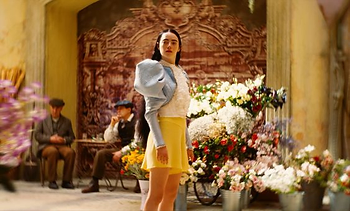
As the film advances, her development is exceptionally fast, and her mind is trying to match her body at record speed. Consequently, her assessment and perception of the world are oscillating, and as she embarks on the ship to Alexandria, the once vibrant colors now adopt more bitter tones, her clothes, though still maximalist, appear more sober. The same happens upon arriving in Paris, with dominant grays and blacks, and her absorption regarding the society she is in takes more realistic forms.

Entering the world's oldest profession, Bella faces brutality, boredom, and the existential void her adventure has become. Her clothes are now purposeful, with dark academia and philosophical trends, manifesting her desire to become a doctor, following in the footsteps of her creator.
At the end of her adventure and return to England, the character still deals with significant dilemmas and setbacks, such as the repercussions of her life as a prostitute, her father's death, and her kidnapping (orchestrated by Victoria's husband, her former self). So many changes mark Bella's assimilation of body and mind, reaching a common point, perhaps even existential fulfillment. The environment is still surreal, but much more "grounded," and unlike Frankenstein, Bella is no longer a creature; she is a creator.

Frankenstein and the Sin of His Own Existence
The concept of what is natural does not apply here. How can a being, even with all human characteristics, walk on earth without any ties, family, genes, or past? A true heap of parts that do not converse with each other, a unique existence, and for these same reasons, it is lonely and desperate for human warmth, even if it does not have such a characteristic within itself.
The end, the beginning, and the middle - as the 1818 story is presented to us - of the "monster" story relate to very human and very present feelings in everyday life: sense of belonging, answers about who one is, love, philosophical and moral questions, etc.

Frankenstein's appearance varies according to the horror each person can imagine, but noneless the creature is always judged and declared immoral and inhuman from the moment energy is injected into his body. Despite his many qualities - the character has an interest in literature, is understanding and empathetic, and doesn't represent harm to humanity - his mere presence makes women faint and men reach for their weapons.
Like Bella Baxter, Frankenstein lives to understand that cruelty is as human as love, and naivety can often be a blessing. But while Baxter finds a balance and satisfaction point - which reflects her pure and usual appearance to beauty standards - Shelley's creature walks the opposite path, and his mind succumbs to the monstrous horrors of his appearance.
We cannot think there is only factor that determines one's success and another's disaster. The environment influences the individual in various ways, and not beeing aligned with this ecosystem is what makes Frankenstein collapse, with good reason. Besides not having a being made in his image (even though he begged for a bride), "Satan's offspring" responds to the evil he lives with more evil, as that was the only thing he received.
Bella suffers throughout the story, whether due to misogyny, infantilization, naivety, or the malice of others. However, the support of people who care for her, combined with her determination and conviction, sustains her so that the character faces life and does not fear it. This is not the case with Frankenstein, and neither literature, philosophy, nor love to all peaople can save him.
A fulfilling life is achieved by the poor thing that is Bella, and through mistakes and successes, she understands humanity (hers and in general). This may make us wonder how the real poor creature, Frankenstein, could have experienced a life not necessarily better, but a little easier.
Source
MODERNGURLZ, analyzing the outfits in poor things 🧠📚🎩. Available on: https://www.youtube.com/watch?v=ver7VjyQuP0
SHELLEY, Mary. Frankenstein. LaFonte, 2022, 1ªed.


Comentários